



Healthy ageing is often framed around appearance. This might include staying slim, looking youthful, or maintaining a certain image of fitness. But when health professionals talk about ageing well, the focus is usually somewhere else entirely.
For physiotherapists, the real goal for patients is function: being able to move confidently, recover well, and remain independent for as long as possible.
Himarsha Venkatsamy is a physiotherapist who works within the NHS in musculoskeletal rehabilitation. Himarsha has a breadth of knowledge about the role protein plays in supporting functional strength, mobility, and independence later in life.
Himarsha’s message is reassuring: ageing does not automatically mean decline. But maintaining resilience and quality of life does require the right foundations, and nutrition plays an important part.
Why Healthy Ageing Is About Function, Not Appearance
When people think about being strong, many immediately picture aesthetics such as muscle definition, gym culture, or athletic talent. But in the context of ageing, strength means something very different.
According to Himarsha, healthy ageing is fundamentally about maintaining the ability to live independently and participate in everyday life.
“Healthy ageing isn’t simply the absence of disease,” she explains. “It’s about maintaining the functional ability that allows someone to live well – to mobilise, have autonomy, stay socially connected, and continue doing the things that matter to them.”
This perspective aligns with how the World Health Organisation (WHO) defines healthy ageing. According to the WHO, it’s not just about living longer, but “the process of developing and maintaining the functional ability that enables wellbeing in older age.”
In practical terms, Himarsha explains that this might mean:
walking comfortably around your community
carrying shopping or household items
being able to continue working comfortably
playing with grandchildren
maintaining an active social life
These everyday actions require us to move in a steady manner and respond to physical demands, and they all rely heavily on functional strength.
Appearance can still matter, of course. “Feeling good about how we look may support our confidence and wellbeing,” Himarsha acknowledges. “But when health professionals talk about ageing well, the much broader priority is maintaining the capability to live life on your own terms.”

The Link Between Protein and Muscle Maintenance Over Time
One of the most important factors influencing mobility and independence as we age is muscle maintenance.
During childhood and early adulthood, the body is primed for building muscle tissue. But as Himarsha explains, this gradually changes. “As we move into our 30s and 40s, the body becomes less efficient at repairing and rebuilding muscle tissue. Maintaining muscle becomes more challenging, which is why the nutritional support for repair becomes increasingly important.”
Protein plays a key role here because it is broken down into amino acids which are the building blocks of skeletal muscle. These amino acids help support the ongoing repair and maintenance processes that keep muscle tissue functioning properly.
Over time, this matters because there is a gradual reduction in muscle mass and function. This is often referred to as age-related muscle loss.
In some cases, this can progress into a condition called sarcopenia, a progressive loss of muscle mass and physical ability that can affect mobility and daily function.
Sarcopenia is not an inevitable outcome of ageing, but it highlights why maintaining muscle becomes increasingly important over time. When muscle function declines, simple activities may become more challenging, for example:
standing up from a chair
climbing stairs
walking short distances
maintaining balance
These changes to the muscles can ultimately influence mobility, independence and overall quality of life.
Protein helps support the body’s ability to maintain muscle tissue over time, which is why it remains a foundational part of nutrition throughout adulthood and into later life.
Find out more in our article: How Much Protein Should You Be Consuming as You Get Older – and Why Does It Matter More After 35?
How Protein Supports Everyday Health and Mobility
Muscle maintenance is not only about long-term health outcomes. It also directly affects how we move through the world each day.
Maintaining muscle for daily activities
Many movements we take for granted depend on strong and responsive muscles. Himarsha points to the sit-to-stand movement as a particularly important example.
“Being able to stand up from a chair might seem simple earlier in life, but it becomes one of the most important functional movements later on,” she explains. “It’s essential for getting up, walking independently, and moving safely around the home.”
Activities like walking, lifting objects, or maintaining balance all rely on coordinated muscle activity throughout the body. Even when we are standing still, multiple muscle groups are working continuously to maintain stability.
As protein contains essential amino acids that support muscle health, it’s important to ensure that you include a range of quality proteins in your diet.
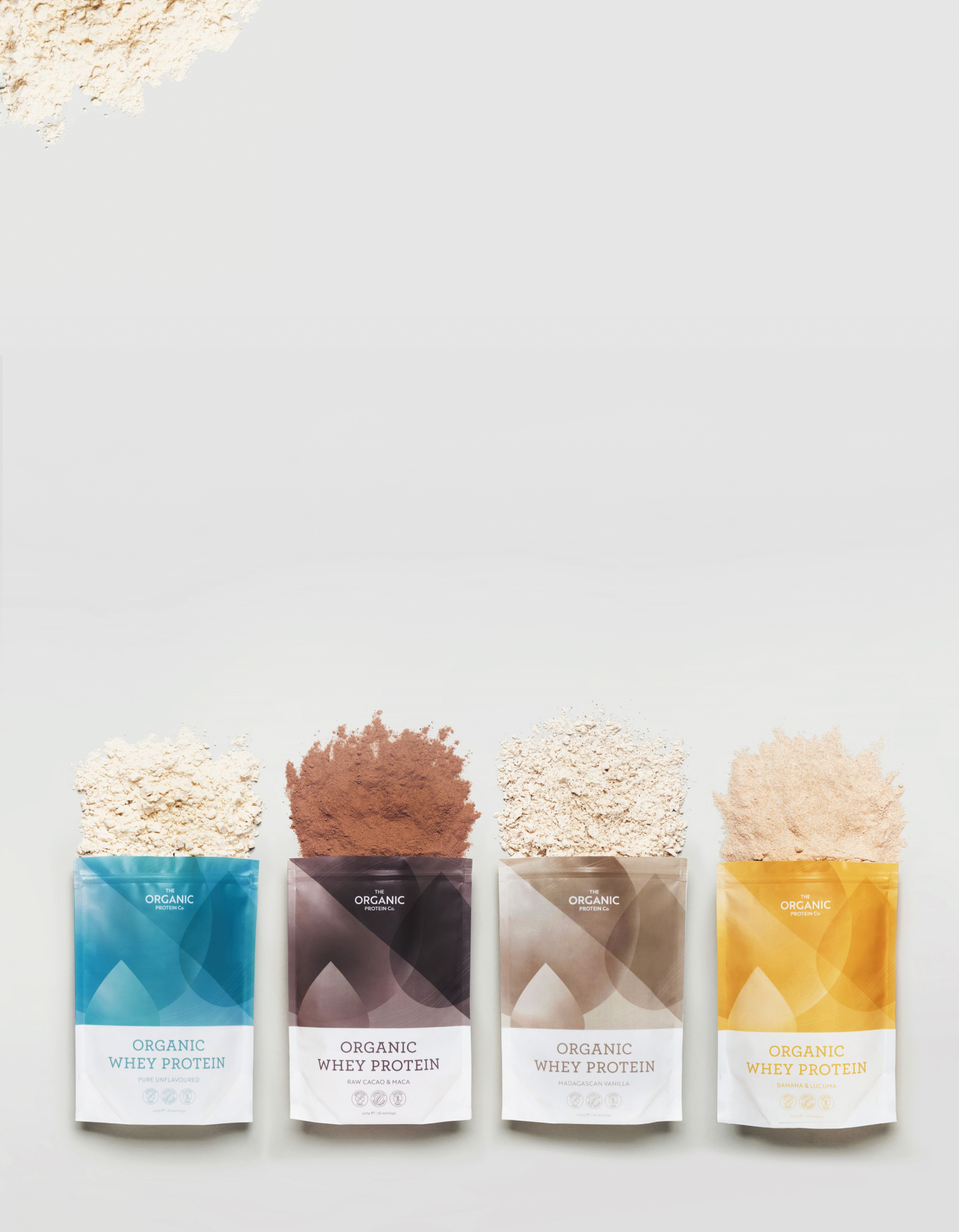
See our range of high-quality organic whey protein powders here.

Supporting recovery and resilience
Protein also contributes to how the body responds to everyday stressors. The body constantly repairs and renews tissues, from muscles and connective tissues to immune cells. Amino acids derived from protein help support these processes.
This becomes particularly important when the body needs to recover from illness, injury or periods of reduced activity. For example, after a fall, infection or hospital stay, people may experience temporary declines in mobility. Having sufficient muscle reserves can help the body cope better with these challenges.
Himarsha describes this as building physical resilience. “When we maintain skeletal muscle, we’re effectively giving the body reserves. These reserves can support recovery during periods of reduced mobility, such as illness or injury.”
In this sense, protein contributes not just to muscle maintenance, but also to the body's broader capacity for recovery and resilience over time.
Learn more about protein’s role here: How Does Protein Interact With Gut Health, Digestion and Nutrient Absorption?
Protein’s Role in Preserving Independence Later in Life
Perhaps the most meaningful outcome of maintaining muscle health and mobility is the ability to remain independent. For many people, independence represents more than simply living alone. It reflects confidence in movement, autonomy in daily life, and reduced reliance on others.
Maintaining muscle through nutrition can support this goal by helping to preserve functional ability. When people feel physically capable, they are often more confident in their movements and less fearful of falling or injury.
“The ability to complete daily activities independently can have a huge impact on someone’s confidence and mental wellbeing,” says Himarsha. This may then create a positive cycle of independence and improved quality of life.

Why Protein Alone Isn’t Enough – but Still Matters
Although protein plays an important role in healthy ageing, it does not work in isolation.
When working with patients, Himarsha frequently emphasises that “for the body to maintain muscle effectively, it needs both good nutrition and regular movement.”
Movement encourages muscles to remain active and responsive, while protein provides the building blocks needed to support repair and maintenance.
Other factors that support healthy ageing include:
adequate sleep for recovery and tissue repair
balanced nutrition that supports overall health
good hydration
vitamin D and calcium for bone health
social engagement that encourages activity and wellbeing
Protein is not a magic solution, but it remains an important part of the bigger picture.
If you’re consuming high-quality protein but haven’t noticed a difference, find out why in our article: Why Don’t Some People Feel the Benefits of Protein Straight Away – and How Can That Be Fixed?
Building Nutritional Foundations for Ageing Well
For people in their 40s or 50s thinking about long-term health, the idea of ageing well can sometimes feel distant. But the foundations for movement and independence later in life are built many years earlier.
Himarsha encourages people to think about protein and overall nutrition as a long-term investment in future quality of life.
“It’s never too early or too late to start supporting your body,” she says. “If you think about the activities you want to be able to enjoy in your 60s, 70s or beyond, the goal is to build the resilience that will allow you to keep doing those things.”
And while no single nutrient can guarantee independence later in life, protein plays a meaningful role in supporting the biological processes that help make it possible.
Why We Founded The Organic Protein Co.
At The Organic Protein Co., we craft our whey powders with everyday health and digestion in mind. No artificial fillers or additives, just high-quality, organic wheys made to higher welfare standards. Here’s what makes our protein different:
Fresh organic whey made without chemicals
Cold-filtered undenatured protein
Bioactive proteins are preserved to support bone, muscle and immune health
High-quality protein that provides essential amino acids the body can readily use
Versatile, convenient and easy to add to smoothies, bakes or oats
A range of award-winning wheys to choose from
Our organic whey protein is designed to fit into real life. Shop our range today.